When you search for Xpand 2.4.0, you’re probably thinking about a plugin that can add instant sound to a track without massive synth programming. Producers tell me they love Xpand because it packs tons of musical parts in one instrument.
Although there isn’t an official “Xpand 2.4.0” page widely available (most resources refer to Xpand!2, the popular multitimbral soft synth), the idea here is the same: a plugin with a huge sound library and flexible controls that’s useful in many genres.
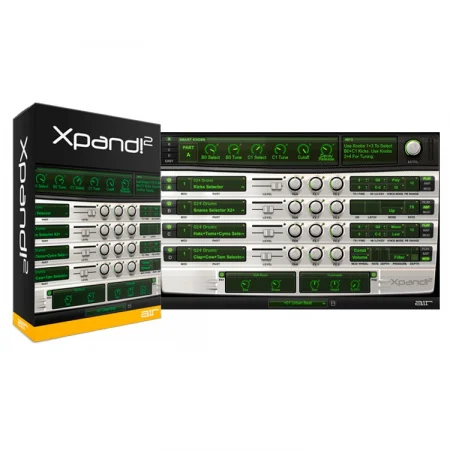
I’ve used Xpand‑style instruments for beats, movie cues, background pads, and quick demo song ideas. This version feels familiar — big library, easy tweaks, quick inspiration.
What Is Xpand?
Xpand is a multitimbral VST/AU instrument that loads into your DAW and gives you a broad palette of sounds with minimal setup. You can stack parts, change effects, and switch presets fast — something I appreciated when deadlines were tight.
Unlike some heavyweight synths with deep parameters, Xpand keeps things approachable, especially if you just want a sound that works.
Sounds and Library in Version 2.4.0
The library is organized into categories you already know:
- Synth pads
- Leads
- Bass
- Drums
- Acoustic instruments
- FX and atmosphere
These sounds aren’t random: they’re designed to fill gaps in modern production. You’ll notice, as I did, that the presets work well together — you can build an intro pad, drop in a bass, and add rhythm without changing plugins.
How Xpand Works Inside Your DAW
Most people load Xpand on a MIDI track. You pick a preset and play. But before that, check:
- Your DAW’s plugin folder path
- Whether VST2/VST3 and AU formats are enabled
- That your host rescan plugins after install
If you don’t see Xpand, it’s usually a folder path issue or a rescanning need — not a plugin fault.
Why Xpand Sometimes Doesn’t Load (Real Fixes)
This is one of the most common frustrations users share.
The reasons I’ve seen:
- Your DAW hasn’t scanned the folder holding Xpand
- The plugin format isn’t supported (e.g., VST3 only, but DAW expects VST2)
- Permissions blocked install
What to do
Close your DAW, make sure the Xpand plugin folder is in your plugin paths, then restart and rescan. This simple step fixes most load problems — I’ve had to do it myself when switching hosts.
System Requirements for Smooth Use
Xpand will run on most modern setups, but heavy sound libraries demand RAM. You’ll want:
- A current Windows or macOS system
- At least 8 GB of RAM (more helps)
- Enough storage for sound libraries
- A DAW that supports VST/AU
If your DAW keeps choking on big presets, increasing buffer size and moving samples to fast storage makes a noticeable difference.
Patterns, Effects, and Easy Editing
Part of Xpand’s appeal is that presets aren’t just static sounds — they often include arpeggiation, movement, and effects.
You’ll find:
- Built‑in reverb and delay
- Smart modulation controls
- Patterns that play in time with your project
This means even simple MIDI can feel alive. Press a chord, and the arpeggiator can make it feel like a band — that’s a part of what made Xpand friendly for beginners.
Beginners: Is Xpand Hard to Use?
Not really.
My friend, a hobbyist producer, told me that at first she couldn’t understand why Xpand sounded dull. The thing is, these presets are starting points. Adding a little reverb, adjusting the EQ, and layering sounds brings them to life.
That’s how real tracks get made — don’t expect a mix‑ready sound right out of the box.
What’s Special About Version 2.4.0?
While official details for 2.4.0 specifically aren’t widely published, most incremental updates in this series focus on:
- Better stability with modern DAWs
- Improved preset compatibility
- Minor bug fixes
- Modern plugin format support
Think of this version as a polishing step on a familiar tool.
When Xpand Isn’t Right for Your Project
If you want deep synthesis or advanced modulation matrices like Serum or Massive, Xpand isn’t that kind of plugin. It’s more of a musical toolbox — fast to use, easy to load, great for writers and producers who want textures and tones quickly.
But for cinematic soundscapes, beats, background pads, quick ideas, it’s great.
Two Quick Tips That Help Every Producer
- Save your own presets once you tweak a sound you like — it saves time later.
- Don’t load all four parts at once unless your system can handle it.
These are the small things you learn after using it for hours.
1.Why does Xpand 2.4.0 not load in my DAW?
Because your DAW might not scan VST plugins properly, or the plugin folder isn’t added. Rescanning plugins and checking folder paths fixes most load problems.
2.What systems support Xpand 2.4.0?
Xpand runs on Windows and macOS if your system supports VST/AU standards and has enough RAM for large sound libraries.
3.Does Xpand 2.4.0 have lots of sounds?
Yes. Xpand comes with thousands of sounds — from leads to pads, drums to bass — ready to layer and tweak.
4.Can beginners use Xpand easily?
Yes, its pattern browser and smart knobs make experimenting fun even for people new to synths.
5.Why do some presets sound flat at first?
Many presets need mix tweaks and effects; they’re starting points, not finished tracks.