If you’re here looking for FabFilter Total Bundle 2026.1, you likely want to know what it is, what’s included, and whether it’s worth your time and money.
I remember the moment I first loaded Pro-Q on a rough mix that sounded dull. At first, it was confusing, but an hour later I was shaping tones in ways that made my mix sit better in the room. From that point, I started leaning on FabFilter plugins more than almost anything else.
This article explains what Total Bundle actually offers in real work, clears up common confusion, and helps you decide if it fits your workflow.
What FabFilter Total Bundle Really Is
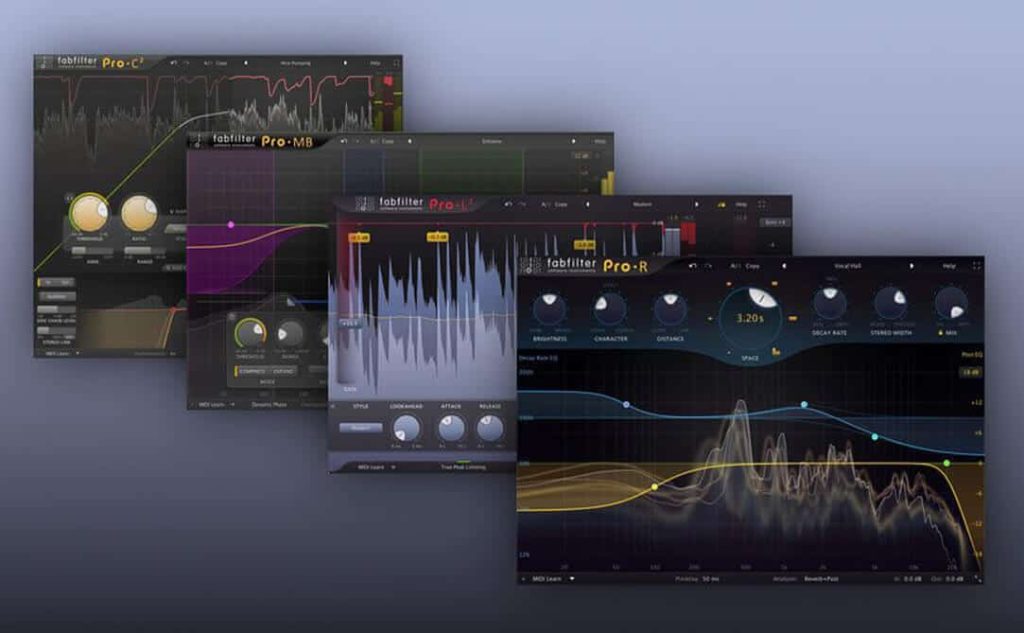
FabFilter Total Bundle is a collection of all FabFilter audio plugins, covering EQ, compression, limiting, multiband dynamics, reverb, distortion, delay, filters, and even synthesizers.
It isn’t just a marketing name — it’s the entire suite from one of the most respected plugin developers in the audio world.
Unlike grabbing individual plugins one by one, the Total Bundle gives you all of these under one umbrella, with consistent interface design and workflow logic.
What’s Included — Plugin List and Everyday Use
You get 14+ plugins for different stages of a project:
- Pro-Q 4 – EQ with dynamic bands and visual curves
- Pro-C 2 – Compressor with multiple styles
- Pro-L 2 – Limiter with loudness metering
- Pro-MB – Multiband dynamics
- Pro-DS – De-esser
- Pro-G – Gate/expander
- Pro-R 2 – Natural, musical reverb
- Saturn 2 – Multiband distortion / saturation
- Timeless 3 – Delay with modulation
- Volcano 3 – Creative filter
- Twin 3 / One / Simplon / Micro – Synthesis and filter tools
Each of these has a visual, modern interface that shows exactly what’s happening to your sound — which is one reason many producers prefer them for both precise mixing and creative work.
Installing FabFilter Total Bundle and Getting It to Appear in Your DAW
Everyone hits this snag at least once: the plugins don’t show up after install.
Here’s what actually trips people:
Normally, most DAWs look for plugins in specific folders. If the installer placed FabFilter in a different location, your DAW won’t list them automatically. That often makes people think the bundle is “broken” when it’s just a scanning issue.
What to do:
- Check your DAW’s plugin manager
- Add the folders where the bundle installed VST3/AU/CLAP
- Click “rescan” or “refresh plugins”
That simple rescan often makes the tools appear instantly.
Why Producers Actually Value FabFilter Plugins
Producers talk about FabFilter plugins a lot because of two traits:
Visual feedback. You see EQ curves, dynamic bands, loudness meters — that immediate picture tells you much faster what’s happening to sound.
Consistent workflow. Once you learn one FabFilter plugin, the rest feel familiar because they share design language and interaction style. That matters in busy sessions where you don’t want confusion slowing you down.
I remember switching from older EQs with tiny knobs and no visual display, and it felt like moving from a mapless trip to one with clear directions.
Can Beginners Use This Too?
Many beginners feel intimidated at first because the plugins have rich visual displays and lots of controls. It’s common to think everything looks “pro-level” and complicated.
But in practice, that visual feedback helps you learn. Instead of guessing what a frequency band is doing, you see it. That shortens the learning curve, especially for things like cutting muddy frequencies or taming harshness.
System and DAW Compatibility You Should Know
FabFilter Total Bundle supports all major DAWs including:
- Ableton Live
- Logic Pro
- Cubase
- Reaper
- Pro Tools
- FL Studio
It installs in formats like VST, VST3, AU, AAX, and CLAP, giving you flexibility no matter your workflow.
Common Licensing Issues and Verified Keys
A frequent frustration I’ve seen in producer forums is when a plugin asks for license verification even after you’ve entered it.
Often the fix is:
- Remove old demo or trial versions completely
- Restart your DAW
- Re-enter the license code inside the FabFilter installer or activation tool
FabFilter has official support and an activation portal if you need help verifying a key. That’s always safer than relying on third-party sellers with inconsistent codes.
Real Tips From My Own Projects
I never load all 14 plugins in every project. Most sessions I lean on:
- Pro-Q 4 for quick cleanup EQ moves
- Pro-C 2 on vocals and buses
- Pro-L 2 at the end of a master chain
- Saturn 2 for adding texture on synths
Those few cover 80% of daily mixing work, but having the rest ready feels reassuring when creative choices take you somewhere unexpected.
1.What is FabFilter Total Bundle?
It’s a full collection of all FabFilter audio plugins for mixing, mastering, and creative sound design in music production. Each plugin in the bundle serves a different purpose but they all share the same smooth, visual workflow that many producers enjoy.
2.How many plugins are included in FabFilter Total Bundle?
It includes 14+ plugins spanning EQ, compression, reverb, distortion, filters, delays, and synths.
3.Why is FabFilter Total Bundle not showing up in my DAW?
Typically this happens when the plugin formats aren’t scanned or installed in the DAW’s plugin path. Make sure VST3/AU/CLAP formats are installed and trigger a rescan inside your DAW’s plugin manager.
Expanded: Many DAWs keep separate folders for 64-bit and 32-bit plugins, and if you install one but scan the other folder, your DAW won’t list FabFilter plugins. A rescan often fixes this.
4.Can FabFilter Total Bundle be used on both Windows and Mac?
Yes. The bundle supports macOS and Windows with formats like VST, VST3, AU, AAX, and CLAP.
5.Is FabFilter Total Bundle good for beginners?
Yes, it’s beginner-friendly once you get used to plugin basics. The interface is visual, responsive, and often considered easier to read than older “text-heavy” plugins.
Expanded: The graphs, real-time visual feedback, and intuitive mouse interactions help you learn EQ, compression, and dynamics by watching what happens to your sound instead of guessing. Many producers say that seeing EQ curves or dynamic bands visually helped them learn mixing faster.